Pǔ’ěr chá: Storage in Western Europe
The majority of Pǔ’ěr chá (普洱茶) is stored in Asia (predominantly China, some in Malaysia and Taiwan) because of its climatic conditions:
warm (~30°C)
humid (~75% RH)
stable (comparatively small day to day, day to night, and season to season differences)
These are ideal for ageing and allow efficient storage in simple storehouses, usually without the need for any air conditioning.
The climate in Western European countries is significantly colder, drier, and more variable. However, residential houses offers throughout the year a warm (~20°C), humid (~50% RH), and stable baseline to start with. High quality, long term storage and ageing is possible too with some of the Asian procedures slightly adjusted for the local conditions. Nevertheless, fast accelerated ageing still doesn’t work here (even with massive climate control).
Personally I prefer the balanced, “natural” storage over the classical “wet” or “dry”, or the mixed “traditional” storage (of course all storage “types” are not that meaningful as they are all relative terms anyway). Also I don’t like strong fermentation either (Pǔ’ěr is not my favourite tea, I only drink it in the 3 months of winter).
Therefore, my intention is primarily to preserve the tea while it continues to age normally, keep it in optimal drinking condition and don’t rush its fermentation.
The value of correct storage is of great importance and has a big effect on Pǔ’ěr, and is often overlooked and underrated. Here’s a short summary on how to store Pǔ’ěr chá in Western Europe.
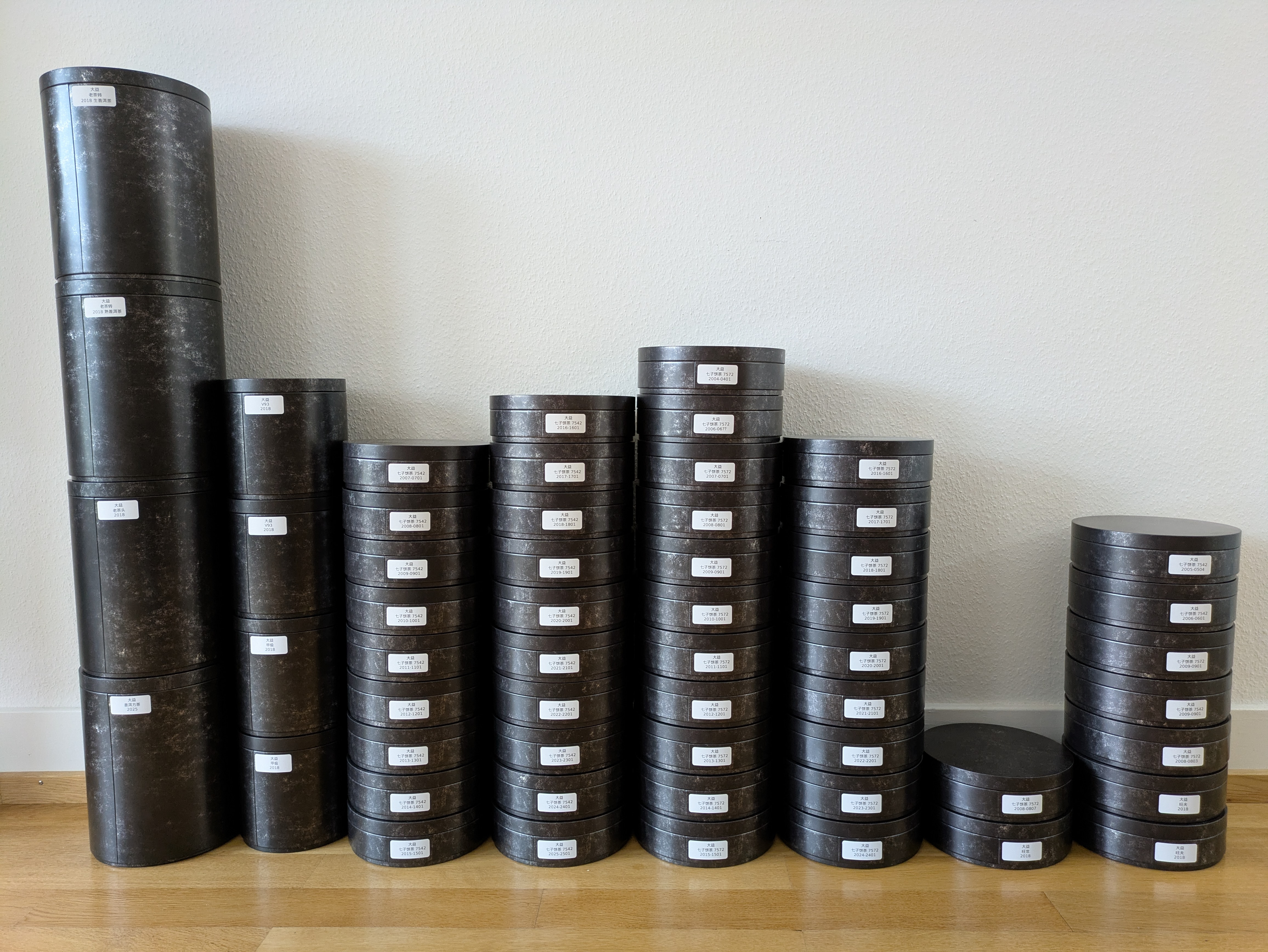
1. Location
1.1 No light
Choose a location with neither direct nor indirect sunlight (= ultraviolet radiation) exposure:
direct sunlight damages organic material (“bleeching”)
indirect sunlight by heating up the containers inbalances the microclimate (“suppression”)
1.2 No odors
Choose a location with neither direct nor indirect odor exposure:
direct odor immissions (like incense, food, air polution, etc.) makes the tea undrinkable
indirect odor immissions (especially other teas stored next to it) taint the taste and dilute the flavours
Always use individual containers for each tea, store only identical tea of the same year and batch in the same container. Idealy never store one cake, brick or tuo on its own, buy multiples and store them together for better ageing.
2. Climate
2.1 Consistent temperature
Use a location with no interference from any devices or structures next to it:
use an regular indoor location for mild temperature curves (i.e. no attics with large day/night temperature differences)
aim for >= 20°C average temperature for natural storage (i.e. no cold basements)
don’t use a place next to any heat dissipating devices (like radiators, computers, etc.)
don’t use a place next to an outside facing wall
always leave 5 to 10cm distance to a wall for air to circulate (generally prevents mold on the wall but also isolates the containers further from possible immissions)
As consistent temperature as possible allows even and steady fermentation. However, neither air conditioning or filtering is needed. Regular day to day, day to night, and season to season fluctuations are balanced out fine with otherwise correct indoor storage. Also humidity control is much more important for storage and ageing, and much less forgiving than temperature control.
2.2 Consistent humidity
Use humidity control packs to ensure a stable humidity level:
aim for ~65% RH
Lower than 60% RH will (completely) dry out the tea, higher than 70% RH increases chances for mold.
3. Equipment
3.1 Proper containers
Use containers that are long term available and that are easily stackable, both in form and dimensions as well as load-bearing capacity. They should be inexpensive, otherwise it’s most likely scam (there are people selling snake-oil containers “specifically” for tea storage).
For long term storage and ageing:
never use plastic: they leak chemicals over time and are time consuming to get rid of any plastic smells (no “tupperdors”, mylar and zip lock bags, etc.)
never use cardboard or bamboo: they let to much air in, absorb too much humity and dry to slow
never use wood: they emit odors (no humidors)
never use clay: they absorb all humidity and dry out the tea (glazed or porcelain urns are acceptable for short term storage)
Always use sealed but not air tight, cleaned steal cans (i.e. with no oil residues from manufacturing; such as these).
3.2 Proper humidity control
Use two-way humidity control packs to either absorb or add moisture depending on the needs:
use humidity control pack(s) in every container
use one 60g pack (such as these) per 500g of tea
attach them with tape to the lid of the container to not be in direct contact with the tea
3.3 Proper labels
Put labels on the outside of the containers to not need to open them to know what is inside and disturbe the ageing:
write at least manufacturer and name, pressing year, and batch number on the label (such as these)
if desired and not otherwise kept track already elsewhere, add additional information such as the amount of items, weights, previous storage location/type, date of purchase, vendor, price or price per gramm, etc.
3.4 Proper monitoring
Measuring and checking temperature and humidity regularly prevents storage parameters turning bad going unnoticed:
put temperature and humidity measurement sensors (such as these) inside some of the containers (e.g. at least one in every different size/type of container)
keep at least one temperature and humidity measurement sensor next to the containers on the outside to monitor the storage location
4. Storage
4.1 Continued maintenance
Before beginning to initially store a new tea, let it acclimatize for 2h after unpacking from transport (or longer if temperature differences between indoors and outdoors are high, i.e. in winter).
Then continuesly:
once a month briefly air all containers for a minute or two
once a month check for mold, just to be safe
every 3 to 6 months check all humidity control packs for need of replacement
monitor battery life of temperature and humidity measurement sensors
Humidity control packs can be recharged (usually voiding any warranty) by submerging them for 2 days in distilled water and 4 hours drying on paper towl afterwards. Check with a weight scale after recharging, they should regain their original weight (e.g. 60g plus ~2 to 5g for the packaging).
Finally
With a correct Pǔ’ěr chá storage:
beginn to drink Shēng Pǔ’ěr (生普洱) roughly after about 10-15 years, or later
beginn to drink Shóu Pǔ’ěr (熟普洱) roughly after about 3-5 years, or later
Prepare the tea by breaking it into, or breaking off from it, ~5 to 10g pieces about 1 to 3 months ahead of drinking and consider increase humidity to 70% RH during that time.
2026年享受茶的快乐!